Today's Chinese guest: How he travels, where he books, and what he's looking for.

Chinese providers design the travel experience with the guest in mind; bookings are made without going through the hotel’s website, and guests travel differently than they did years ago. This raises a simple question for us: Is our hotel bookable and appealing in the places where Chinese guests make their decisions today?

The topic. From tickets to WeChat to hotels: Three trends that are transforming sales.

Düsseldorf. November 16, 2026 — In China, we saw how entire travel chains are digitally connected, not just individual products. We will cover this topic in the second of four parts of our report on HOSPITALITY X's trip to China in October 2026.

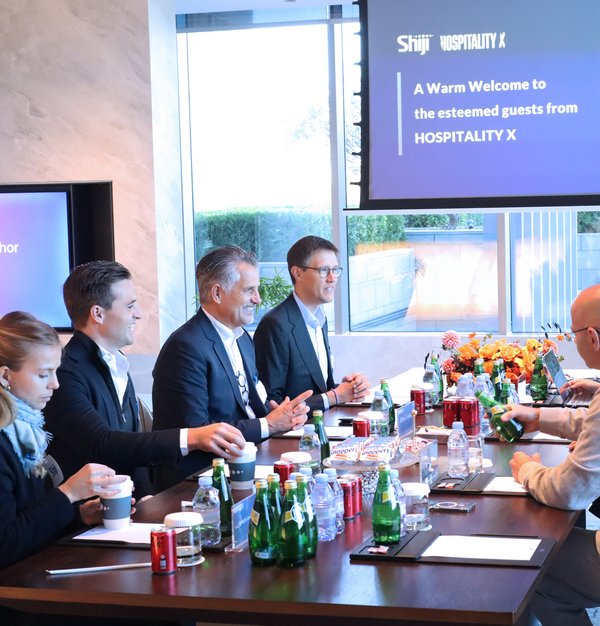
To this end, Otto Konstantin Lindner, Tobias Sebastian Oberdieck, Josephine Lindner und Otto Lindner held talks in Shanghai and Beijing with Shiji, with Dida Travel, one of the largest Chinese travel agencies for trips to Europe and overseas, and with the Chinese Hotel Association.

Unless otherwise noted, the figures in this article are based on these discussions.

The Thesis / 01. Chinese providers create guest experiences, not individual products. The hotel is one component.

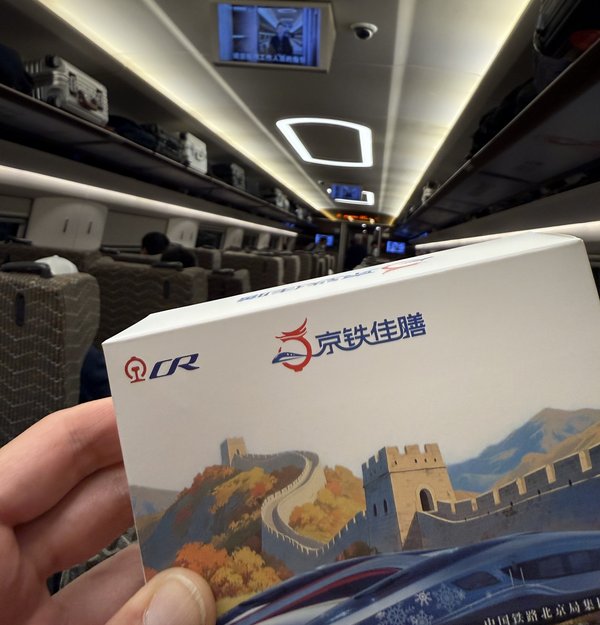
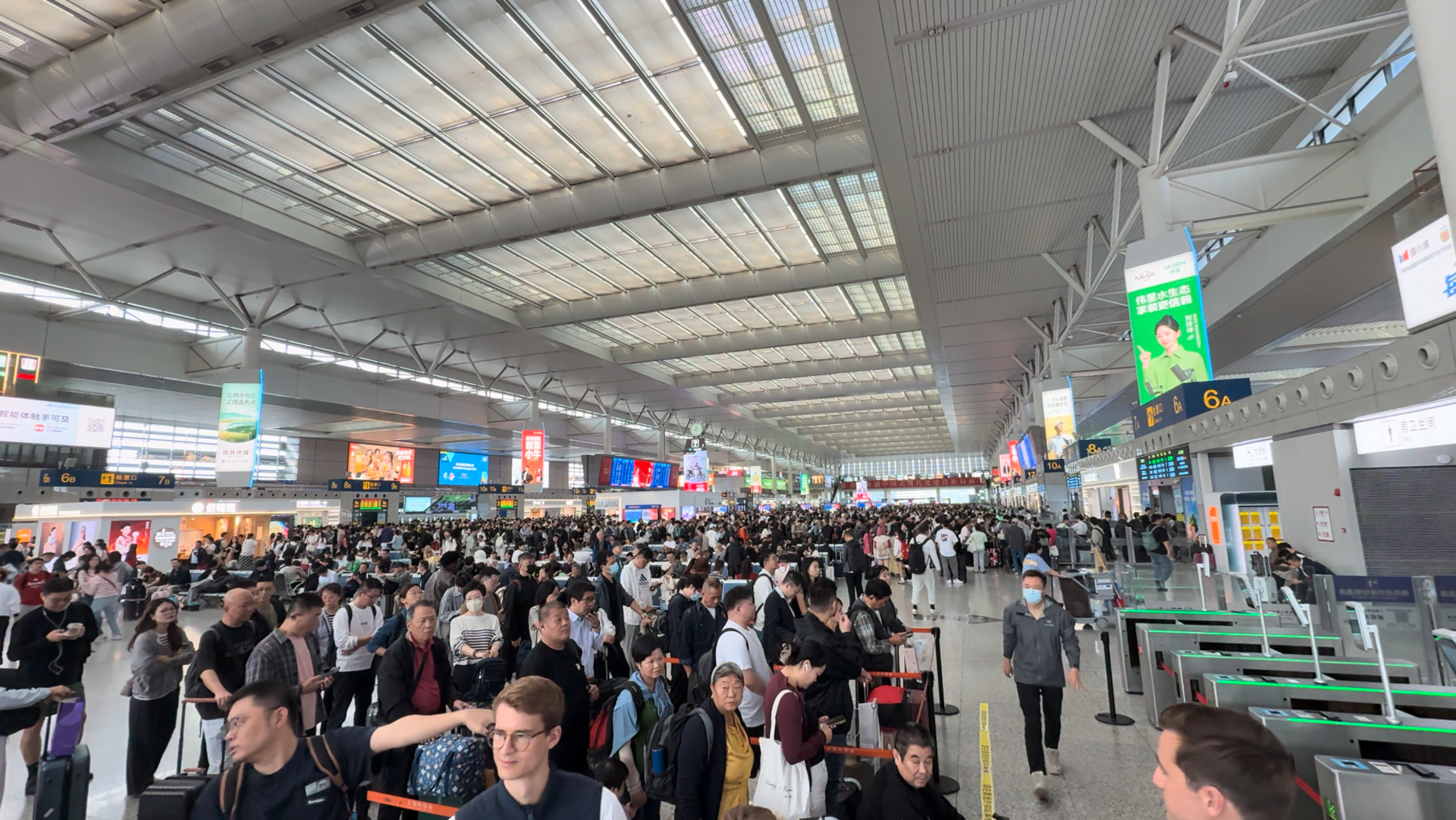
High-speed trains travel between the cities at speeds of up to 380 kilometers per hour; we covered the 1,200 kilometers from Shanghai to Beijing in under four hours.

Ticket purchases, identification, and food orders on the train were handled digitally via mobile platforms, as were payment and delivery. There are also interfaces between delivery services and hotels. Real-time translation is, of course, in use and noticeably reduces language barriers.

Context. The difference lies less in individual functions than in the mindset: viewing the journey from arrival to departure as a single chain, not as separate stages. A hotel brand is thus defined by its performance at these touchpoints: upon arrival, during check-in, at mealtimes, and upon departure. 

This is the standard we apply to our properties. Not every technology can be adapted for Europe.

The Thesis / 02. Bookings are made directly through WeChat and TikTok. If you can't be booked there, you don't exist.

We were surprised to learn that Chinese hotels don’t actually have their own websites. Bookings, communication, payments, and customer service are all handled through affiliated platforms, primarily WeChat and Chinese versions of TikTok. 

Redirecting Chinese guests to a German-language hotel website is therefore of little help to them.

A review request: Together with Shiji, we’re determining whether and how our properties can be booked directly there. This is a review, not a commitment.

Context. For sales, this means a second channel alongside hotel websites, booking portals, and travel agencies. Before making a decision, we need to address questions regarding technology, costs, and data protection. We’re taking European data protection regulations into account.

The Thesis / 03. Chinese visitors tend to travel for longer periods, with their families, and for leisure.

The people we spoke with described a shift in travel behavior: longer stays instead of visiting six cities in five days, more relaxation, and more family trips. On average, they cited around 100 euros per person per night. 

Bookings are usually made through travel agencies. The travel agency Dida Travel reached out to us on its own initiative. Our interviewees cited the visa process as a key factor: visa-free travel to Europe would be a significant advantage for Chinese guests.

The president of the Chinese Hotel Association would like to see a campaign that brings more Chinese guests to Germany and the Black Forest. This requires a tourism narrative centered on the landscape, regional experiences, and Black Forest cake.

Context. The figures are based on information provided by our interviewees and do not constitute a market study. Length of stay and relaxation are gaining importance—this is the trend described by our interviewees. 

We are reviewing our offerings for Chinese guests—particularly rooms with extra beds for families—and our collaboration with travel agencies.

Key messages.

  • Chinese providers view travel as a chain; the hotel is one component.

  • Bookings are made via WeChat and TikTok apps, not on hotel websites.

  • Direct bookability via Shiji is a test, not a commitment.

  • Chinese guests travel for longer periods, with their families, and for leisure; figures of around 100 euros per person per night were cited.

  • Travel agencies and the visa process are the key factors.

Impact.

  • Sales: We are working with Shiji to determine how our properties can be made bookable on Chinese platforms.

  • Offers: We are revising our offers for Chinese guests, particularly family rooms and stays.

  • Partners: We are reviewing our collaboration with travel agencies and maintaining communication with Dida Travel and the Chinese Hotel Association.

  • Target Groups: We are exploring Chinese guests as a new target group: families at the Hotel Vier Jahreszeiten am Schluchsee, trade show attendees at The Curve Hotel BayArena, and nature and sports enthusiasts at the Golf & Sporthotel Wiesensee. Chinese guests and partners are also a focus for Nürburgring Hotels & Ferienpark, as demonstrated by Xiaomi’s partnership with the Nürburgring.

Conversation.

How do you prepare for Chinese guests? We’d love to hear about your experiences and tips. Feel free to reach out to us. 

Next week, we’ll be discussing technology in the hotel industry: what works and what doesn’t.

About HOSPITALITY X. HOSPITALITY X is an operator, consultant, and investor in the hospitality industry. We operate The Zipper Hotel & Apartments in Düsseldorf, The Curve Hotel BayArena in Leverkusen, and the Hotel Vier Jahreszeiten on Schluchsee. As consultants, we advise Nürburgring Hotels & Ferienpark and the Golf & Sporthotel Wiesensee.