Apleona ICC Client Event 2026:
Taking Service Quality to a New Level—For Sustainable Excellence

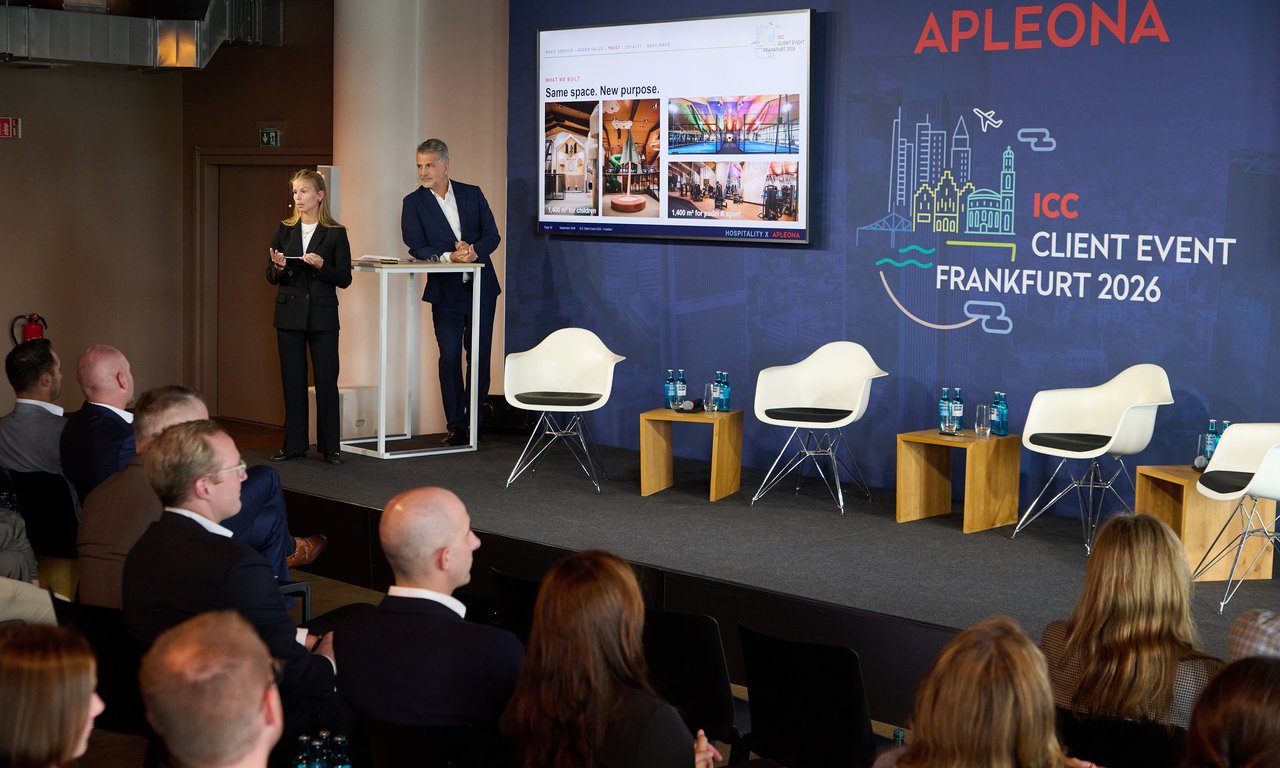
When anyone can meet the specifications, it comes down to people. At Apleona’s 2026 ICC Client Event, Josephine and Otto Lindner demonstrated to an audience of about 80 executives from facility management and real estate how basic services can foster trust and resilience.

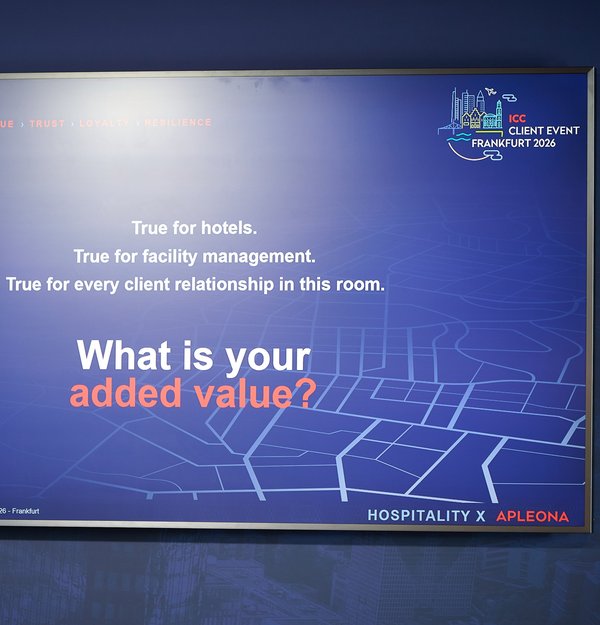
What is your added value,
if anyone can provide the basics?

Apleona’s ICC Client Event takes place annually and serves to strengthen relationships with key clients.

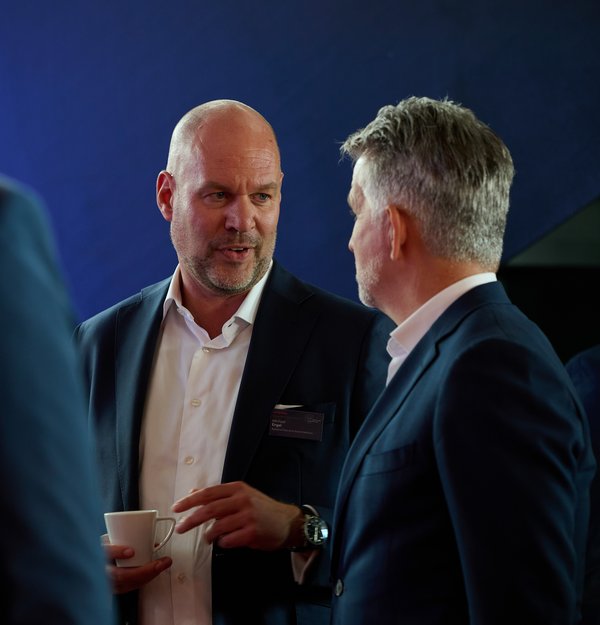
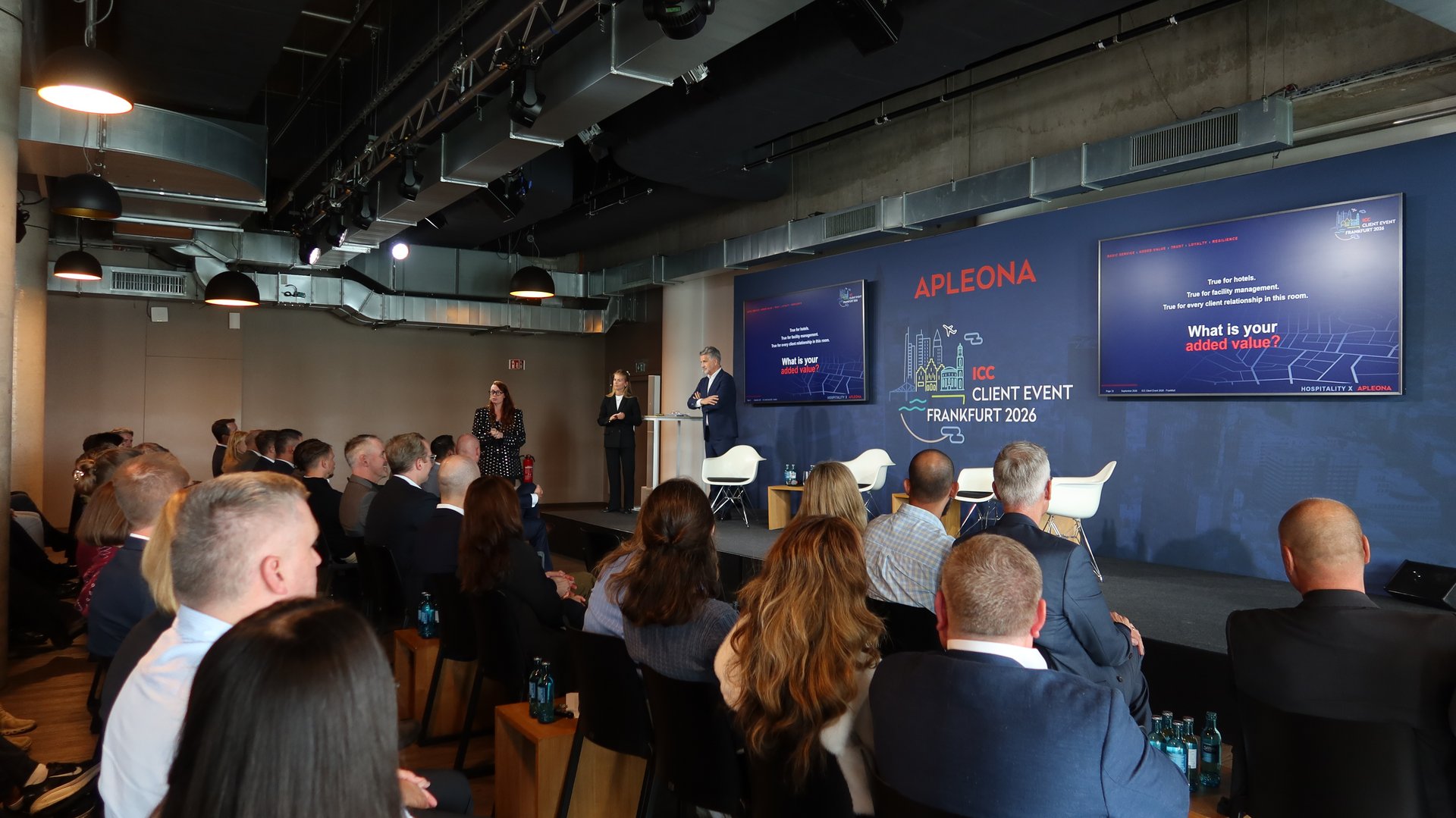
On September 21, 2026, approximately 80 participants gathered at Westhafen Pier 1 in Frankfurt: executives and decision-makers from facility management (FM) and real estate across all industries. The question posed to the audience: What is your added value if everyone can deliver the basics?

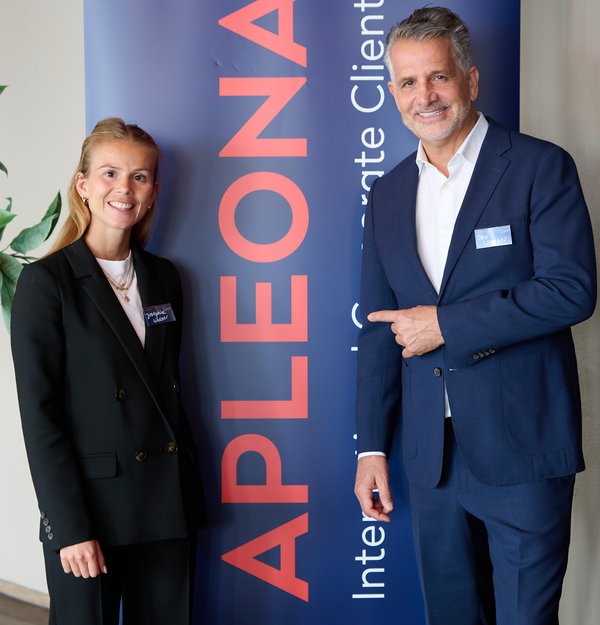
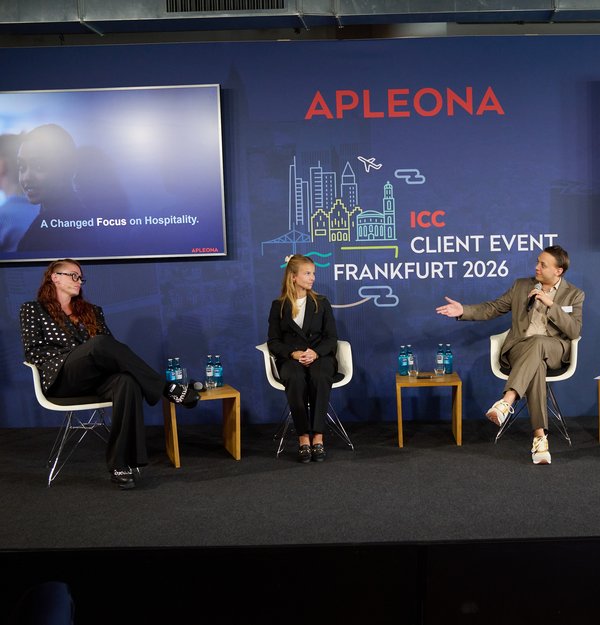
Josephine and Otto Lindner took the stage as representatives of HOSPITALITY X Invest and HOSPITALITY X. Here are the key takeaways from their presentation.

The topic. When quality is simply expected.

What facility management can learn from the hospitality industry, where quality standards are simply expected: Differentiation no longer comes from basic services, but from the people who provide them—as demonstrated by the turnaround at the Hotel Vier Jahreszeiten on Schluchsee.

The starting point is the same in both industries:

  • Costs: They’ve been rising for five years, while prices haven’t kept pace.
  • Bankruptcies: at a level the industry hasn’t seen in decades.
  • Commodity: The market is consolidating around the lowest-priced option.

Anyone can meet the specifications today. It’s the people who make the difference.

Service or hospitality. What customers remember.

“Service is what you do. Hospitality is how people feel about it.” Preston Lee, quoted by Otto Lindner

Service reacts; hospitality anticipates. Service delivers what was promised; hospitality delivers what was never expected. Service solves the problem; hospitality makes people feel understood. Four moments illustrate the difference:

  • The glass of water. Service: It arrives when the guest asks for it. Hospitality: It’s already on the table.
  • The room. Service: It’s clean. Hospitality: Someone notices the flaw first.
  • The complaint. Service: The problem is solved. Hospitality: The guest feels understood.
  • The technician. Service: The device is repaired. Hospitality: He explains how to prevent it from happening next time.

Hospitality arises where three things come together. 

  • Authority: Problems are solved on the spot, without approval and without escalation. 
  • Attitude: Skills can be trained, but attitude cannot. 
  • Team: When ratings improve, the team is rewarded collectively—never individuals. The real shift: from control to trust, from process to personal responsibility.

Processes create service. People create hospitality.

The house. The Four Seasons at Schluchsee.

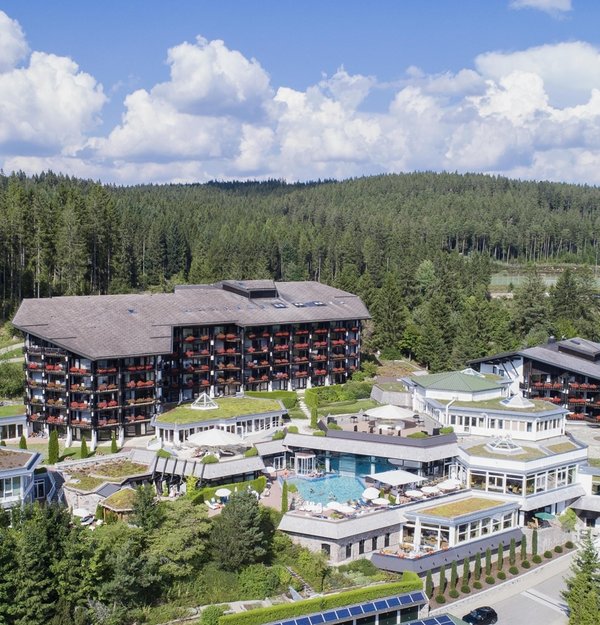
The Hotel Vier Jahreszeiten at Schluchsee is the largest family resort in the Black Forest. HOSPITALITY X serves as the operator and owner’s representative there. 

The starting point was “a licensing issue, not a staffing issue.” So we returned decision-making authority to where the guests are. 

Same people, new structure. 

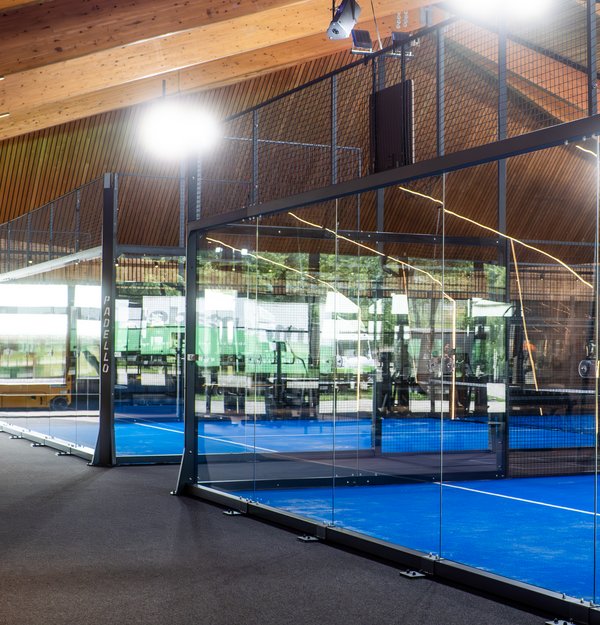
Instead of putting guests through years of renovations, we first listened—to the team and the guests—and then invested where the added value would be immediately felt: Two barely used indoor tennis courts were transformed into what the guests had asked for: a 1,500 m² indoor playground for children and a 1,400 m² sports hall with two padel courts. Visible, usable, and valuable from day one.

Same space. New purpose.

More about the sports hall: The Coolest Hotel Gym—the new sports hall at the Vier Jahreszeiten at Schluchsee.

Five key points. From the hotel to facility management.

The five key takeaways from the presentation:

Basic Standards—Basic standards are no longer a selling point. No guest remembers that the room was clean; no customer remembers that the SLA was met—both are simply taken for granted. The only thing people remember is the person who noticed something first and took action.

Listening—We didn’t start with a renovation; we started by listening. First to our team, then to our guests—and that changed where we invested our money.

On-Site Decision-Making—Decisions belong where the guest is. Every approval loop is time your customer spends with an unresolved problem. Whoever receives a request is responsible for it until it’s resolved. Every guest receives a personalized response within 24 hours.

Handoffs—Integrated services rarely fail because of the service itself. They fail because of handoffs—which is why one person is responsible for the entire guest journey. One point of contact for the entire guest journey, not five departments for five different service areas.

People and Technology—Technology creates speed; people create trust. We didn’t digitize to get by with fewer staff, but to give the employees we have more time for the guest.

In facility management, the rule is: If feedback only comes at the time of contract renewal, you may understand what went wrong, but it’s too late to change the experience. Listen sooner, understand faster, and take action while it still matters.
After two years. The result.

The results, as illustrated by the Hotel Vier Jahreszeiten, are clear: 

  • 80% direct bookings. No platform, no commission.
  • Three generations. Guests who visited as children return with their own children.
  • Familiar faces. The staff who take care of the guests know the regulars by name.

“None of this came from a marketing campaign. It all came from a culture.” — Josephine and Otto Lindner

Basic service → Added value → Trust → Loyalty → Resilience.

  1. Basic service: a clean room. No one mentions it.
  2. Added value: two halls, built based on what the guests requested.
  3. Trust: the technician who explains things and doesn’t just fix them.
  4. Loyalty: Guests come back; 80% book directly.
  5. Resilience: no bidding process, no interruptions, direct renewal.

Basic service upholds the contract. Resilience extends it.

Father and daughter. Two Perspectives.

Josephine Lindner
Managing Director of HOSPITALITY X Invest

Otto Lindner
Co-Founder of HOSPITALITY X Invest
Chairman of the Advisory Board at HOSPITALITY X
President of the German Hotel Association (IHA)

They run the Hotel Vier Jahreszeiten at Schluchsee together—as father and daughter, each with a different perspective.

Otto has decades of experience in the hotel industry. He knows what keeps a hotel running for over fifty years and is familiar with the current market situation, including rising costs, consolidation, and bankruptcies.

Josephine comes from a background in strategy consulting at McKinsey, specializing in service transformation and restructuring, and has introduced the framework that makes the hotel experience applicable to facility management.

For the FM audience, that was exactly what mattered: real-world examples from operations, with reasoning that isn’t limited to hotels.

The Impact.

  • Exactly our target audience. About 80 executives and decision-makers from facility management and real estate across all industries are exactly our target audience.
  • Validation over visibility. The event was therefore less about visibility and more about validation: The hospitality approach can be applied to adjacent service markets where quality is contractually defined but differentiation remains an open question.
  • Sharpened positioning. At the same time, it has sharpened our positioning—operations, consulting, and capital all from a single source—and we speak from the perspective of P&L responsibility rather than from a consulting standpoint.

Download our presentation.