Synology Solution Summit in Düsseldorf:
"Rethinking the Hotel - HOSPITALITY X develops concepts and has digital expertise".

How do companies ensure they can continue to operate when data becomes the foundation of their business? HOSPITALITY X and Vodafone Business provided the answer from the hospitality industry during their joint presentation, “Rethinking the Hotel.”

The topic. Ransomware, AI regulation, change.

The summit held on November 12, 2026, at the Areal Böhler focused on the issues that concern both CEOs and IT managers alike: protection against malware that encrypts data and demands a ransom, recovery after an attack, the requirements of the EU AI Act, and the responsible use of artificial intelligence. 

The fact that HOSPITALITY X had a voice in this context is less surprising than it might initially seem. The hotel industry has long shown little interest in information technology; many systems still run on their own servers in the basement of the hotel. 

However, as soon as check-in, room keys, workstations, and guest entertainment are handled online, IT moves from the sidelines to the center of operations.

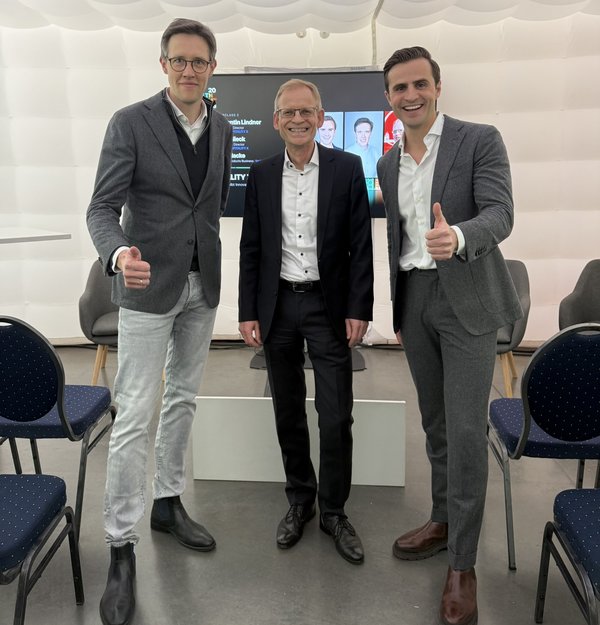
The masterclass “Rethinking Hotels” with Tobias Sebastian Oberdieck, Otto Konstantin Lindner, both co-founders and managing directors of HOSPITALITY X, and Dr. Marcus Hacke, Director of Marketing & Products at Vodafone Business Germany, demonstrated what professional solutions exist.
The house. Infrastructure as the foundation of business.

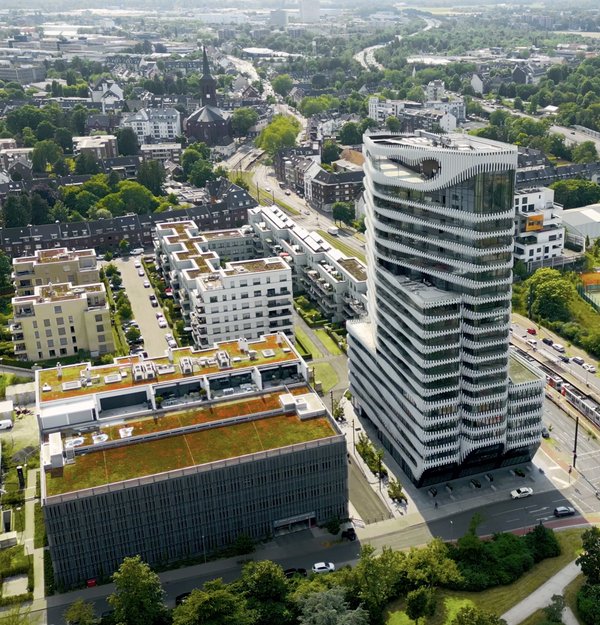
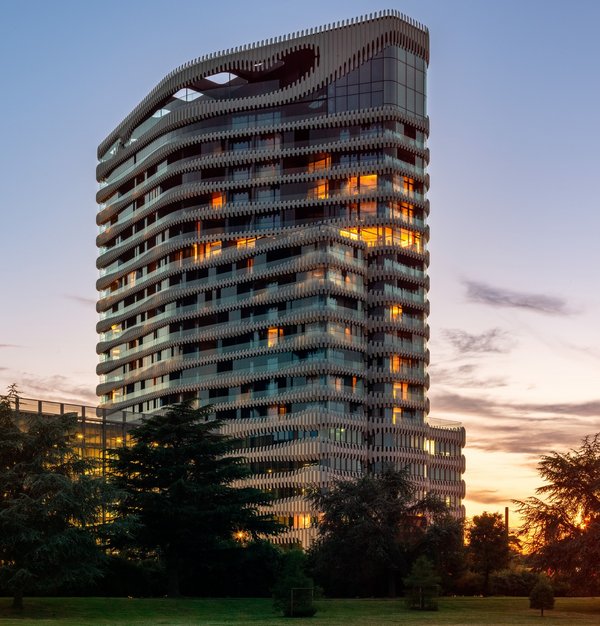
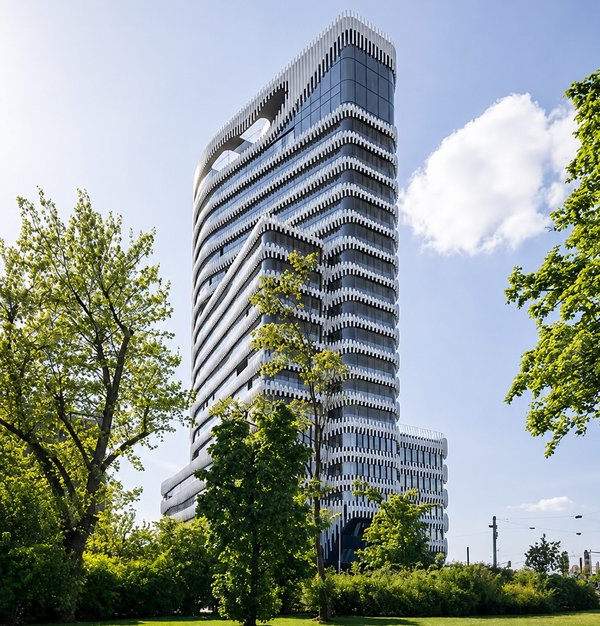
We used THE ZIPPER Hotel & Apartments, our property in the RKM 740 Tower, as an example. The hotel, operated by HOSPITALITY X, features 168 serviced apartments for short- and long-term stays spread across 12 floors directly on the Rhine; in the same building, 14 medical practices are located on five additional floors. 

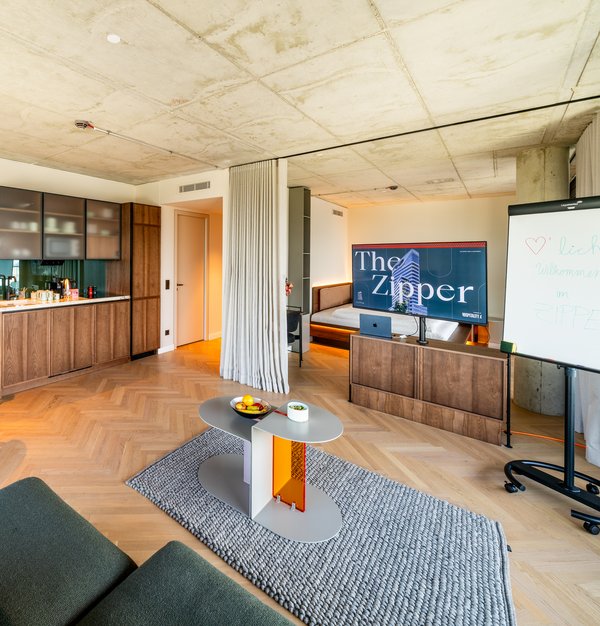
There is no front desk, nor is there a dedicated IT department. Both are the result of a design that starts with the guest’s expectations: arriving without waiting, working as if in an office, being entertained as if at home, and trusting that everything works. 

Each of these expectations relies on a network that never fails.

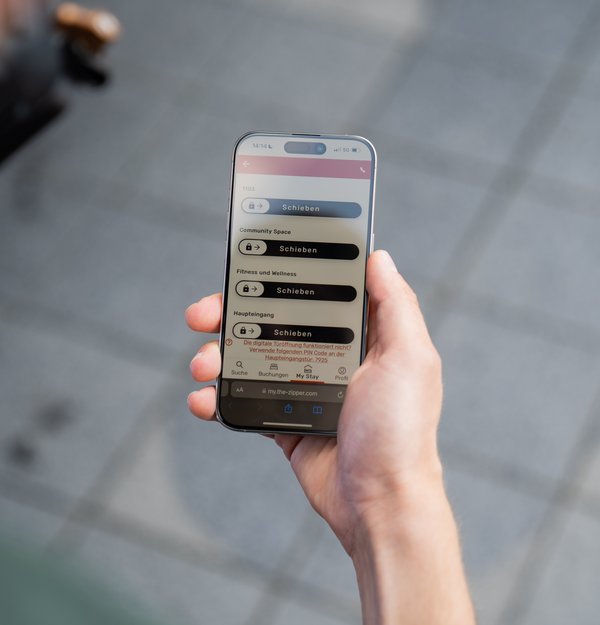
Check-in takes place digitally before arrival; the key is on the guest’s smartphone, and the hosts can be reached via WhatsApp or phone. The door-locking system accesses its own API server, through which the booking system and the lock communicate with each other. 

If the network goes down, the guest is left standing in front of a locked door. Availability here is not a matter of convenience, but the foundation of the business.

Business travelers who work in the apartments for weeks or months have access to internet speeds of up to ten gigabits per second. Cisco Meraki-based Wi-Fi covers all apartments and common areas; redundant lines are designed to ensure that bandwidth remains sufficient even when many of the 168 apartments are on video calls simultaneously. 

Anyone streaming their own content to the apartment’s screen does so on a guest network that is isolated from both the building’s operations and other guests via separate network segments, known as VLANs.

The business. IT that you don't own.

This dependency is mitigated by a division of labor, which HOSPITALITY X describes as a fundamental principle. “Everyone focuses on what they do best,” says Otto Konstantin Lindner, co-founder and CEO of HOSPITALITY X. 

Specifically, the facility’s entire IT infrastructure—not just the guest area—is managed as a managed service by Vodafone Business, supported by Vodafone partner M3 Connect. Cisco Meraki access points and switches are consolidated into a central dashboard and can be controlled remotely at any time.

A prerequisite for this was that the network was factored into the building’s design from the very beginning: end-to-end 10-gigabit Ethernet, hardware that can be managed remotely, and full redundancy. 

Those who have to replace cables and equipment retroactively end up paying twice. The result is an operational model in which the team has time for guests because they don’t have to worry about servers.

Safety. Modular components instead of one-off solutions.

The more a company relies on digital processes, the larger its attack surface becomes. That’s why security at THE ZIPPER is built on four pillars. 

Vodafone Business secures the infrastructure and segregates the network segments. The Microsoft environment is centrally managed and logs system activities. Backups and snapshots—that is, snapshots of the data that can be used to restore the system after an incident—are stored on Synology systems, separate from the data center in Frankfurt. And a Security Operations Center, operated by a dedicated IT service provider, monitors the systems and raises the alarm if anything unusual is detected.

This is where the Masterclass intersects with the day’s host. The local data center partner in Düsseldorf, Händle & Korte GmbH, which operates THE ZIPPER’s central systems, relies on Synology for this: for the backups and snapshots, for the HOSPITALITY X websites, and for the API server of the digital door-locking system. 

The same vendor platform thus safeguards the data in an emergency and provides the digital key for day-to-day operations. Behind this lies a rule that applies far beyond the hospitality industry: A backup stored in the same location as the original data offers only limited protection against a failure or attack.

What minimum security standards a digital hotel should meet today was one of the questions HOSPITALITY X posed to Dr. Marcus Hacke during the masterclass.

The view. The Hotel as a Platform.

HOSPITALITY X is digitizing not because it has to, but because it enjoys doing so. The results are evident in the building’s layout. Vodafone Business is responsible for the network, operations, and managed services; 14 specialist medical practices operate within the building; and sleep diagnostics can be performed in one of the apartments. 

The Zipper Parking garage charges based on license plate numbers. Rolf Benz and JAB Anstoetz have developed their own sofa designs for the building; Fressnapf provides guests with dogs a welcome box and a dog bed; and co-working, fitness, and wellness facilities are all under one roof. 

The hotel thus becomes a place where partners from the telecommunications, healthcare, mobility, design, and retail sectors pool their strengths, and at the same time serves as a showcase property for real estate owners who turn to HOSPITALITY X for operations or consulting.

Specifically in the planning stages is a premium parking facility for collector’s cars in collaboration with Vodafone Business, featuring transponder access and video surveillance in the parking garage. 

Other ideas are under discussion: a digital avatar serving as an AI-powered host; connected living for long-term stays and senior living with emergency call systems, telemedicine, and unobtrusive sensors; IoT sensors for energy consumption, indoor climate, and predictive maintenance; a digital bridge between a doctor’s office and an apartment that could be expanded beyond sleep diagnostics; and temporary high-performance connectivity for events and conferences, such as via 5G. 

The key question posed to the audience was: “What use case is still missing for your own industry?”

The classification. What other industries can learn from this.

The summit’s topics—availability, data backup, and regulatory requirements—are by no means limited to hotels. They apply to medical practices and law firms just as much as they do to small businesses, regardless of which manufacturer’s equipment is in the server rack. 

Three conclusions can be drawn from the example of THE ZIPPER: 

  • First: Think from the customer’s perspective—that is, first determine what the customer’s experience should be, and only then choose the technology. 
  • Second: Plan the infrastructure first—in conjunction with the building, not after it. 
  • Third: Outsource operations that aren’t part of your core business and focus on what defines your business.

This raises questions that every company can answer for itself. What happens if the network goes down? Where is the backup, and is it truly separate from the original? And who will be the first to notice when something stops working?

HOSPITALITY X sums up this approach in one sentence: perfect infrastructure in the background, more time for the guest in the foreground. Owners and operators who want to build their business on this foundation can contact HOSPITALITY X for operations support or consulting.

The complete presentation as a PDF.

"HOSPITALITY X develops concepts and has digital expertise".